

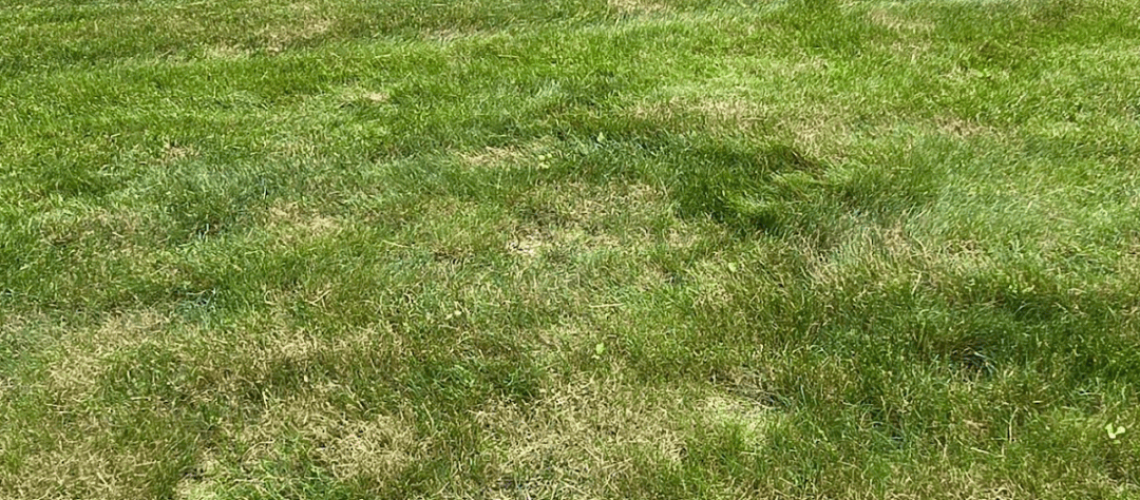

Recently, we spoke with a homeowner in Smithtown, NY who noticed several straw-colored patches in their yard immediately after snowmelt and wanted to know whether the grass was dead or could recover.
If you are seeing similar damage, here is what you need to know about snow mold and how professional lawn care can help restore your lawn.
What Is Snow Mold?
Snow mold is a fungal disease that develops under snow cover when the ground is not fully frozen. It thrives in cool, wet conditions and often appears in early spring as the snow recedes.
According to the University of Minnesota Extension, snow mold fungi grow beneath snow cover in areas with prolonged moisture and limited airflow, especially when snow falls on unfrozen ground.
There are two primary types of snow mold:
Gray Snow Mold
Gray snow mold is more common and typically less severe. It appears as circular, gray or tan patches of matted grass. The affected turf is rarely killed and often recovers with proper care.
Pink Snow Mold
Pink snow mold can be more damaging. It may produce a pink or salmon colored tint and has the potential to injure or kill grass crowns if conditions were severe.
Proper identification helps determine the appropriate treatment strategy.
Is Snow Mold Killing My Grass?
In many cases, snow mold damage is mostly cosmetic. As soil temperatures warm and grass resumes active growth, healthy turf can often recover naturally.
However, if the lawn remains thin, discolored, or patchy several weeks into the growing season, additional treatment may be necessary. The severity depends on turf type, snow duration, and underlying lawn health going into winter.
A professional evaluation helps determine whether the grass is dormant, stressed, or truly dead.
How Do Lawn Care Professionals Repair Snow Mold Damage?
Professional lawn care focuses on restoring airflow, strengthening turf, and preventing long term thinning.
Improving Airflow and Recovery
Light raking may be used to gently separate matted blades and promote drying. Increasing air circulation is one of the first steps recommended by land grant university extension programs for mild cases.
Strengthening the Lawn
Once the lawn begins active growth, properly timed fertilization supports root recovery and encourages thicker turf. Strong, dense grass naturally crowds out disease and reduces the chance of recurring issues.
Overseeding Thin Areas
If snow mold causes significant thinning, overseeding can help restore uniform density. Establishing new growth early in the season prevents weeds from filling bare areas.
Core Aeration for Compacted Soil
Winter moisture and foot traffic often lead to compaction, which weakens turf and increases disease susceptibility. Aeration improves oxygen flow and root development, helping lawns rebound more quickly.
Can Snow Mold Be Prevented Next Winter?
Prevention starts long before snow falls.
The University of Illinois Extension notes that proper fall fertilization, avoiding excessive late season nitrogen, and keeping lawns clear of heavy leaf cover can reduce the likelihood of snow mold development.
Maintaining healthy turf heading into winter is one of the most effective defenses. Lawns that are properly nourished and not overly matted are less vulnerable to fungal growth beneath snow cover.
Professional fall lawn programs are designed to strengthen grass before dormancy and reduce disease risk when winter conditions set in.
Professional Landscaping Company Serving Smithtown, NY & Surrounding Areas
If your lawn still looks damaged several weeks after consistent warmer temperatures, or if large areas appear dead, it is wise to schedule a professional evaluation.
While minor snow mold often resolves on its own, widespread thinning can open the door to weed invasion and uneven growth throughout the season. Early assessment allows for targeted recovery before spring growth peaks.
At Making Solid Ground, we evaluate the overall health of your turf and create a recovery plan based on the severity of damage, soil condition, and grass type. Our goal is not just to repair visible patches but to strengthen your lawn so it performs better all season long.
If your yard is showing signs of snow mold after winter, contact Making Solid Ground today to schedule an inspection or request a quote. We are here to help restore your lawn and prepare it for a healthy, successful spring.